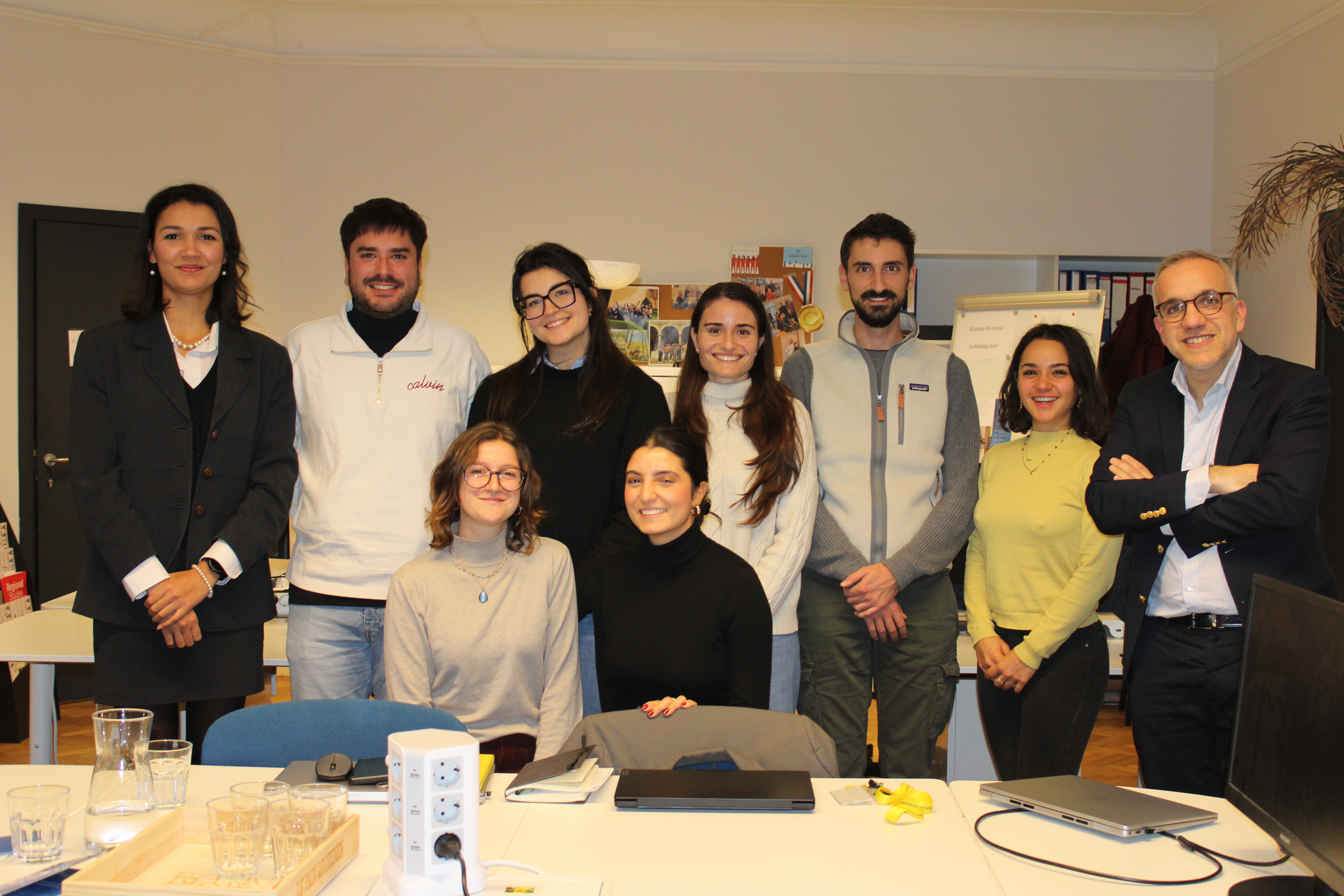
This innovative pilot educational project is coordinated by the Italian-Belgian Chamber of Commerce (CCBI) in partnership with the Local Action Group GAL Prealpi e Dolomiti and the University of Padua, with the support of the Veneto Region. The initiative aims to empower young people from small mountain communities by strengthening their participation in local governance, equipping them with the tools needed to contribute to decision-making and foster sustainable territorial development.
The project’s final phase brings the students to Brussels for one month of immersive training. Here, they deepen their understanding of European project management and the EU’s Green, Social, and Digital transitions through a programme curated by CCBI. The training combines expert lectures, thematic sessions, institutional meetings, and exchanges with stakeholders active in key sectors of European regional development, with the goal to provide participants with both theoretical foundations and hands-on insights to design impactful project proposals that strengthen local communities while aligning with European values and priorities.
During their visit to EURADA, the students met with the Director Francesco Molica and the Policy & Project Officers Jade Connoly and Alessandra Frassetto, who introduced the mission, values, and strategic activities of the association. The session highlighted EURADA’s role as a bridge between regional development agencies (RDAs), EU institutions, and international partners. Particular emphasis was placed on the contribution of Brussels-based networks in helping local stakeholders identify European opportunities, participate in EU programmes, and unlock tailored financial mechanisms. The delegation showed great interest in understanding how RDAs collaborate at European level to exchange best practices, develop joint initiatives, and promote territorial innovation. The meeting also illustrated how local actors can leverage EU ecosystems to amplify their impact at home.
A key part of the discussion focused on EURADA’s contribution to the Harnessing Talent Platform, the European Commission’s initiative supporting regions with shrinking talent pools. The students were introduced to the insights gathered through EURADA’s technical assistance activities, which have helped several regions address structural challenges linked to demographic decline and brain drain. The presentation detailed how tailored support, ranging from talent retention strategies to stakeholder engagement and policy design, enables territories to build more resilient, attractive, and future-oriented ecosystems. This topic resonated strongly with the participants, many of whom come from small mountain communities facing similar challenges. Moreover, EURADA’s flagship projects in the field of circular economy and sustainable innovation were presented, specifically CircSyst, K-CCRI, Just Fashion, and Pocityf, to illustrate concrete examples of EU-funded initiatives shaping greener and more resource-efficient communities.
We were delighted to contribute to this ambitious educational programme and to meet a group of young people genuinely committed to improving the resilience and vitality of their territory. Their visit underscored the importance of strengthening the dialogue between European organisations and local communities, ensuring that young people, especially those from rural and mountain areas, feel equipped and encouraged to engage with EU opportunities and play an active role in local development.
More information about the project here.